
Court of Appeals rules in favor of Case Western Reserve University protesters
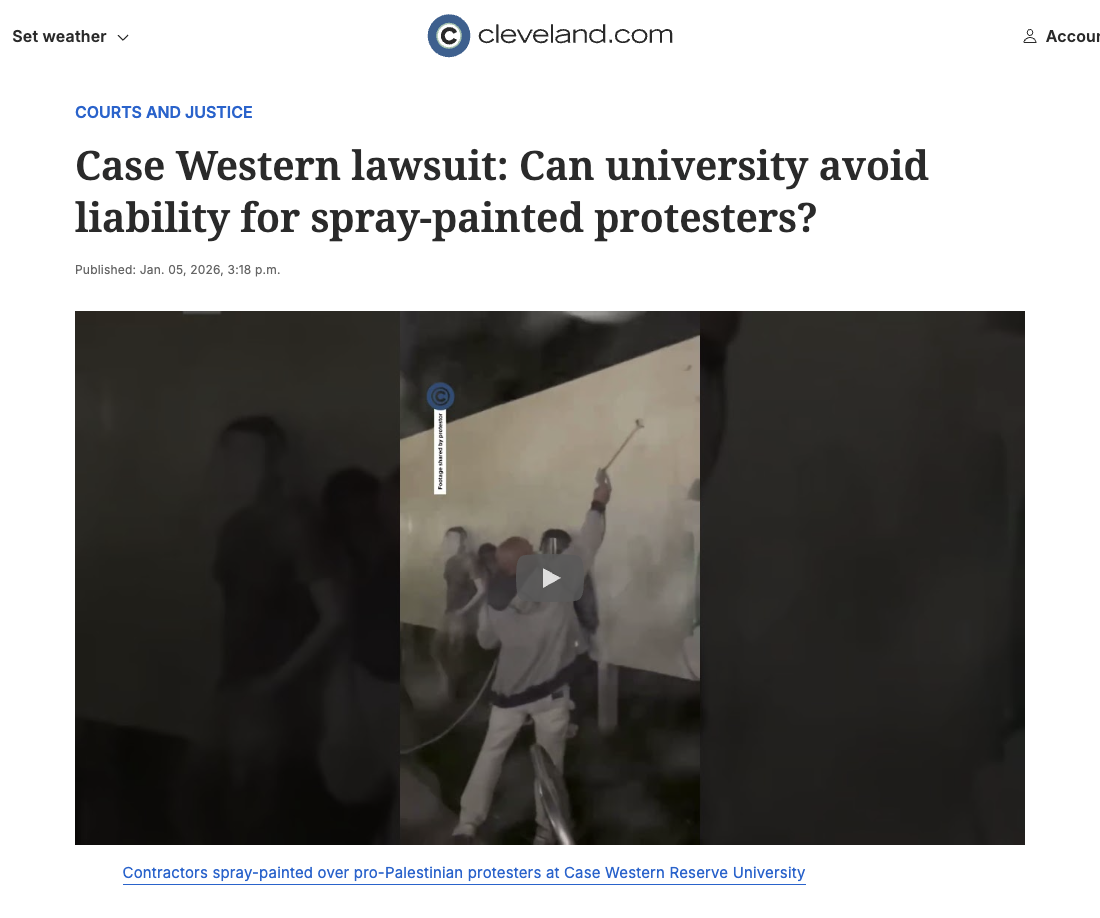
A January headline at Cleveland dot com asked; “Can [Case Western Reserve] University avoid liability for spray-painted protesters?”
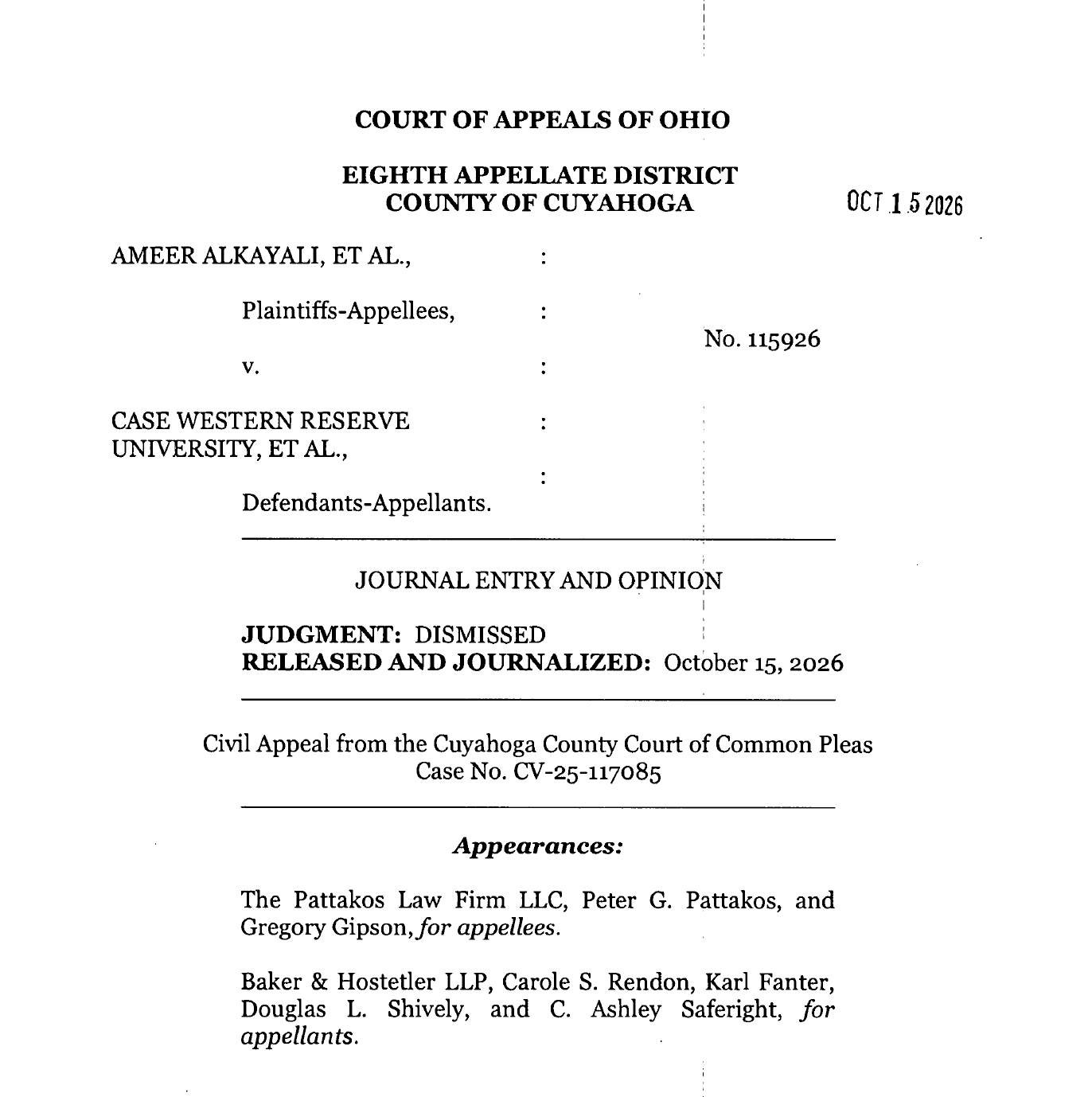
Today, the Eighth District Court of Appeals in Cuyahoga County said no, ruling against CWRU’s appeal in our lawsuit on behalf of campus protesters who were retaliated against by University President Eric Kaler and University Police for their expression of support for Palestinian civilians facing mass murder, brutal violence, and displacement as a result of Israeli military operations in Gaza.
CWRU officials maintained that their police officers were entitled to immunity against the protester’s claims for assault under Ohio’s Political Subdivision Tort Liability Act (Ohio Revised Code Chapter 2744), despite their inability to point to any case where a private university’s police force was held to be entitled to such protection, and despite sound Ohio precedent holding that “public control of the entity … is central to the determination that the entity is a component of government and entitled to sovereign immunity.”
While the three judge panel was split on the immunity question—with one judge ruling that the question was not properly before the Court—all three appellate judges agreed that the trial court properly denied CWRU’s motion to dismiss, because even if CWRU was entitled to immunity under R.C. 2744, the statute does not protect against conduct “exercised with malicious purpose, in bad faith, or in a wanton or reckless manner,” it remains for the jury to decide whether Defendants’ conduct meets that standard.
The shocking actions by CWRU officials in ordering contractors to spray paint over protesters who were standing in front of a pro-Palestine mural made national news, and was one of the more chilling manifestations of a national crackdown against free speech on college campuses as students rallied to support the Palestinian cause against Israel’s mass slaughter and displacement of civilians in Gaza after October 7. Robust protest activity on college campuses and robust criticism of needless violence and destruction caused by U.S.-backed military operations are hallmarks of U.S. democracy and values. The systemic institutional retaliation these campus protesters have faced violates the most fundamental principles on which this nation is founded, including the right to be free from excessive and punitive actions by those who wield state power. This includes privately controlled police forces who are given limited authority to exercise such power, and who in this case clearly exceeded that authority. We remain grateful to have access to our courts to remedy abuses like the one suffered by our clients here.
A copy of the Eighth District’s decision is available here.
For more information about this case see here.